
By a South African Who’s Been Politely Watching from the Balcony with Popcorn and Existential Dread
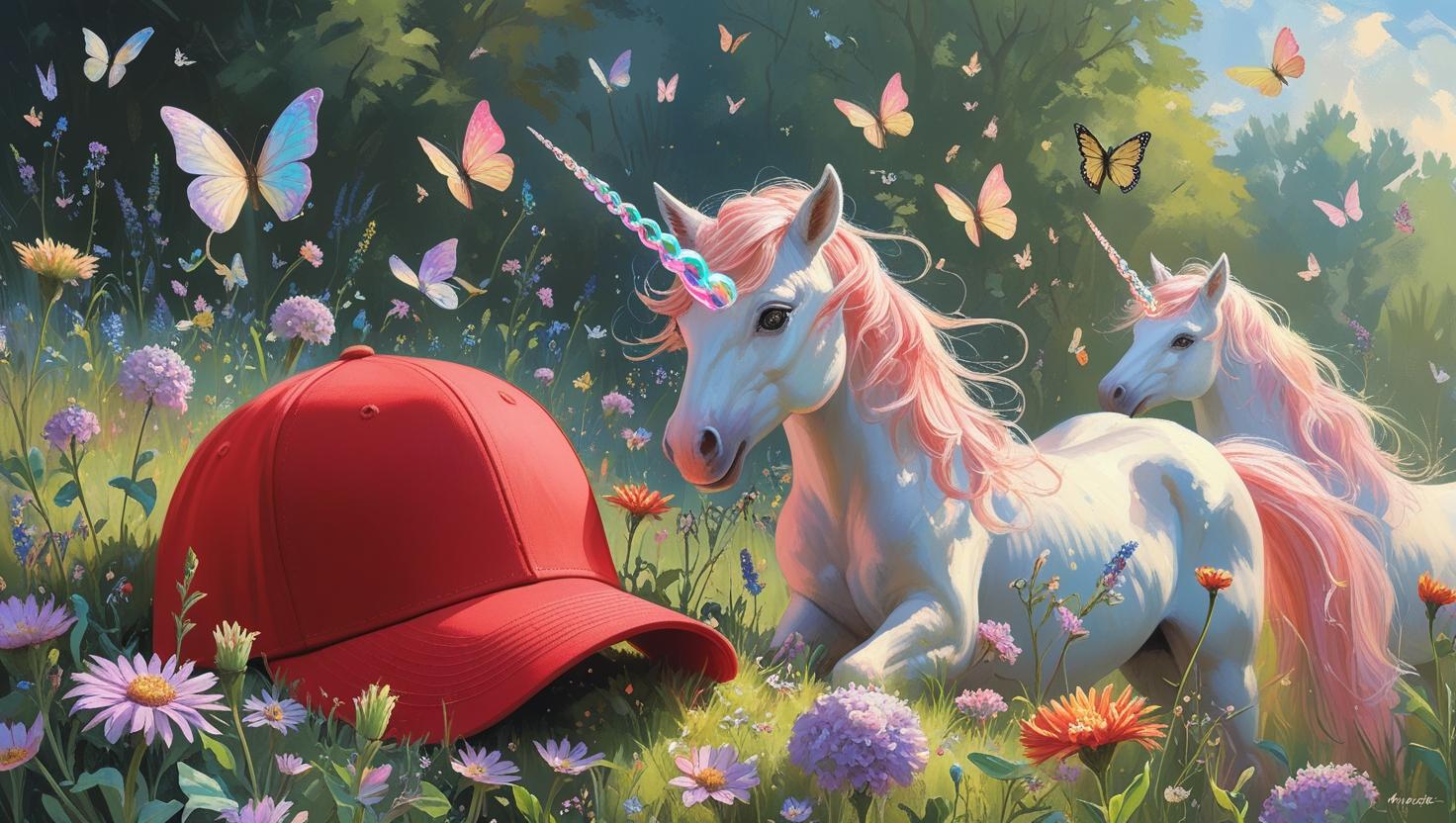
Somewhere in the misty mountains of American political discourse, tucked between a MAGA rally and a gender studies seminar, stands a unicorn grazing beneath a “Both Sides” banner. This is the elusive Trump Middle Ground. It is a terrain so rare, so fragile, so wildly implausible, one wonders if it could ever exist.
Now, I’m not American. I didn’t grow up pledging allegiance to a flag or arguing over which amendments deserve the most attention. I grew up in South Africa, where our political chaos is homegrown and proudly flavoured with Aromat and chicken spice. But I’ve always kept one eye on the States, mostly to check if their dysfunction is contagious. For years I’ve watched US politics with the detached curiosity of someone watching a breakup taking place at the next table in a restaurant.
I chuckled at George W. Bush saying he would “make the pie higher”. I was angry about Clinton’s extracurriculars. I thought, Well, they’re a bit mad, but they’re not ours, so it’s okay. Then came 2016. And the world, or at least the part with a WiFi connection, exploded.
Suddenly, everyone had a flag, a red hat, or a panic attack. Battle lines were drawn with hashtags. And at the centre of this hurricane stood Donald J. Trump: businessman, TV star, meme factory, and walking Twitter algorithm. Love him or loathe him (and there seems to be little in between), the man did something. He ignited an emotional firestorm so fierce that even those of us watching from afar got singed.
And so, I’ve been wondering: can anyone really stand in the middle on Trump? Is there a peaceful hilltop where nuance lives, or is that now just a crater full of melted American dreams and broken friendships?
Let’s weigh it up, shall we?
Trump’s supporters are not all cartoon villains. Many are disillusioned workers who feel abandoned by decades of economic betrayal, culture shifts, and bureaucratic indifference. They saw a man who didn’t speak in polished platitudes or policy white papers, but in loud, brash declarations which were often grammatically shaky, but emotionally potent.
He promised jobs, strength and power. He sold economic nationalism like it was discounted at Walmart. To many, he was the wrecking ball sent to demolish a corrupt system. He was a saviour dressed in a red tie and self-tanner, who would "drain the swamp" and maybe also buy Greenland. I mean, why not?
But on the other hand, how do you overlook the "grab ’em by the pussy” moments and go on to say, “Yes, that’s my guy”? How do you watch him mock a disabled reporter, insult the families of fallen soldiers, or suggest women should be punished for abortions, and still call it leadership?
His supporters will argue, “It was locker room talk,” or “He didn’t mean it literally,” or “Well, at least he’s not Biden.” But if decency is optional, what does that say about the standards we set for leadership? Should the world look up to someone who behaves like this?
And how, in all sincerity, can someone claim to be a Christian while simultaneously selling Bibles that also include the U.S. Constitution, as if Jesus was just another Founding Father with good cheekbones and strong views on the Second Amendment? You don’t have to be religious to find that unsettling. You just need a basic respect for the difference between a holy book and a government document.
Let’s not forget Trump’s wealth, which is a key part of his brand. He says he’s a self-made billionaire, but the maths is sometimes creative. He inherited hundreds of millions from his father and used that money to build an empire fuelled by debt, branding deals, and inventive tax strategies. He filed for corporate bankruptcy six times. That’s not necessarily a sin because capitalism is quite forgiving, but it does raise eyebrows when someone touts themselves as the ultimate business genius while repeatedly asking for financial forgiveness.
So, is it possible for people to take a middle ground? In theory, yes. In practice? That mythical middle ground requires you to simultaneously believe that Trump didn’t really mean the inflammatory things he says, but also did mean the all the things you agree with. That he cares deeply about the working class but stays at gold-plated resorts and plays golf during crises, while reducing access to healthcare. That he’s a Christian warrior, but also thinks it’s fine to sexualise his own daughter on TV.
Middle ground? That’s not nuance. That’s cognitive acrobatics.
It’s not just Trump’s words, it’s his absence of humanity. The lack of empathy for the poor. The willingness to cut Medicaid or pull back USAID, even when it leaves vulnerable people desperately gasping. The smugness with which he objectifies women, not just through locker-room comments, but through policy. Abortion bans? He’ll never be pregnant. But he’ll sign the laws anyway.
That’s what makes him dangerous. Not what he says, but what he doesn't feel.
You don’t have to be perfect to be president. But you should probably understand that leading a country means caring about people who can’t do anything for you in return. Trump doesn’t. He seems more interested in adoration than accountability, more in profit than principle, and more in domination than democracy.
So no, I don’t believe there can be a middle ground. Not with a man who builds walls instead of bridges. And if that makes me partisan, then fine.
Just don’t make me wear the hat. Red is not my colour.